
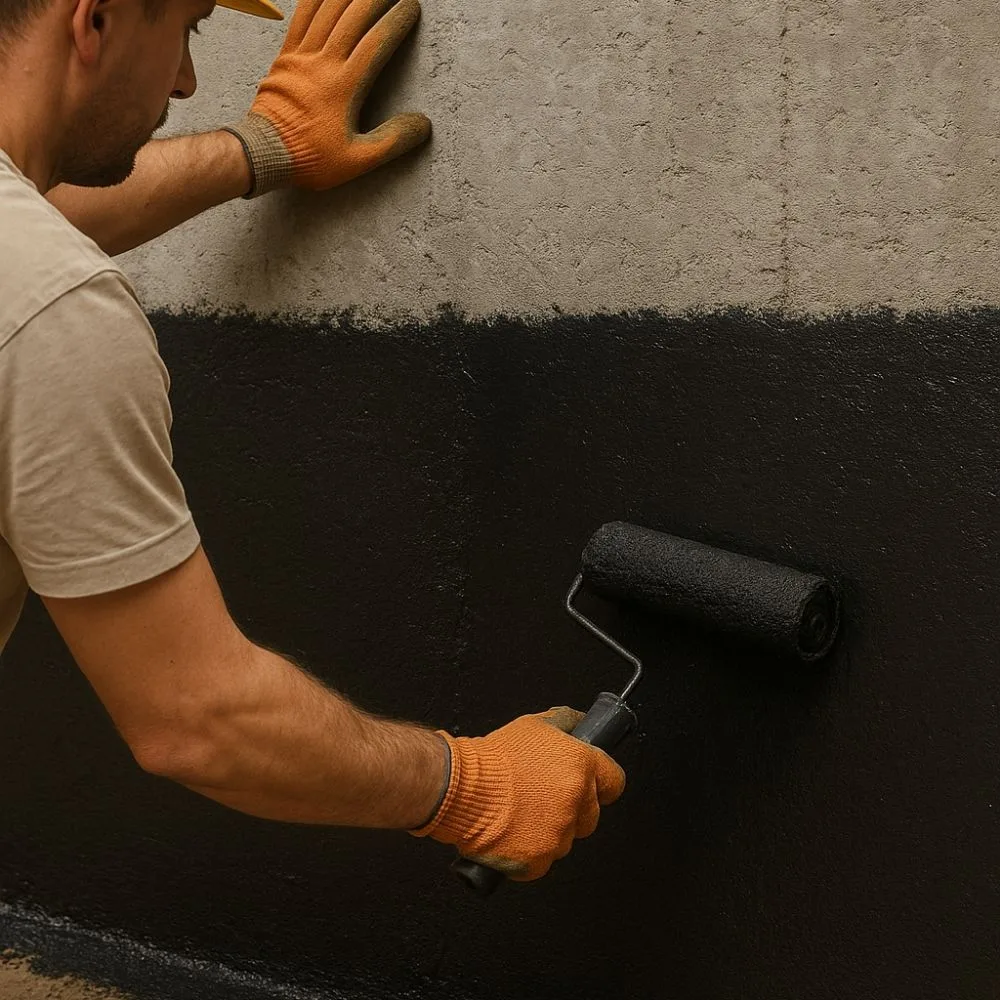
Water leakage from a bathroom is one of the most common problems in homes across Greater Noida and Noida. Water slowly seeps through the floor and walls, and shows up as damp patches on the ceiling below. Many families repaint the ceiling again and again, but the dampness returns. The real fix is proper waterproofing. In this article we explain the signs of leakage, the popular waterproofing methods, what each one costs, how long each lasts, and the mistakes to avoid.
Signs your bathroom needs waterproofing
Bathrooms do not leak overnight. The signs build up slowly. Watch for these:
- Damp patches or yellow stains on the ceiling of the room below the bathroom
- Paint peeling or bubbling on walls next to the bathroom
- A musty smell that does not go away even after cleaning
- White salt deposits (efflorescence) on the wall plaster
- Tiles that feel loose or sound hollow when you tap them
- Water pooling near the drain or seeping under the door frame
- Black spots of fungus in corners and along wall joints
If you see two or three of these signs together, the problem is usually not the tiles. It is the layer below the tiles. That layer is the waterproofing.
Popular waterproofing methods
There are four common methods used in Indian bathrooms. Each has its place. None of them is “the best” for every situation. Here is a plain explanation of each.
1. Cementitious waterproofing
This is the most common method. A cement-based coating, mixed with a liquid chemical, is brushed onto the floor and the lower part of the walls. It is semi-flexible, easy to apply, and works well for normal bathrooms. For most homes, this method is enough. It is also the cheapest option. It is not the best choice for areas with heavy vibration or structural movement, because the coating can crack over time.
2. Brush bond (polyurethane-based liquid membrane)
People in Noida and nearby areas often call this “brush bond”. It is a liquid that you brush on. It dries into a rubber-like, flexible membrane. Because it is flexible, it can handle small cracks and movement better than cementitious coating. It is a good choice for bathrooms on terrace levels or where slight movement in the slab is expected. It costs more than cementitious waterproofing.
3. Membrane sheet waterproofing
In this method, a rolled sheet membrane is laid on the floor and up the walls, then joints are sealed. Sheets give a thick, uniform layer. The catch is that application needs care. If a joint is not sealed properly, water finds its way in and travels between the sheet and the slab. Done well, it lasts long. Done badly, it fails fast. Only use a contractor whose team has real experience with membranes.
4. Epoxy waterproofing
Epoxy is a two-part chemical that hardens into a hard, glossy, non-porous layer. It blocks water very well and also resists chemicals. It is usually used for special situations, not for every bathroom. It is the most expensive of the four and does not tolerate movement well. If the slab cracks, the epoxy layer can crack with it. For a normal home bathroom, epoxy is often more than you need.
Bathroom waterproofing cost per sq ft
Waterproofing cost depends on the area treated, the method, and the condition of the old surface. At Aarna Constructions & Interiors, our rate for waterproofing a bathroom floor plus 3 feet up the walls is Rs 70 per sq ft. This covers the waterproofing work itself. Tiles, sanitaryware and taps are separate.
Before waterproofing can be redone in an old bathroom, the old tiles and plaster usually have to come off. Our demolition rate is Rs 20 per sq ft, and re-plastering is Rs 50 per sq ft. When you plan a full renovation, these three items go together: break, plaster, waterproof.
For your own bathroom, the total depends on its size and what is already there. Instead of guessing, use our free washroom renovation cost calculator. It gives an item-by-item estimate including waterproofing. The final quotation is always given after a site visit, and GST is extra.
How long each method lasts
This is the question every home owner asks: will the leakage come back? Honest answer: any method lasts long only if the surface preparation is done properly and the drainage slope is correct. Assuming good workmanship, here is the general picture:
| Method | Typical life | Flexibility | Relative cost | Best suited for |
|---|---|---|---|---|
| Cementitious | Good, if applied well | Semi-flexible | Lowest | Normal bathrooms, sunken slabs |
| Brush bond (PU liquid) | Good, flexible film | High | Medium | Bathrooms with slight slab movement, terraces |
| Membrane sheet | Long, if joints sealed well | Good | Medium to high | Large bathrooms, sunken slabs, roofs |
| Epoxy | Long, hard film | Low (rigid) | Highest | Special cases, chemical exposure |
One honest point: for a normal ground or mid-floor apartment bathroom in Greater Noida, cementitious waterproofing applied on a well-prepared surface is usually enough. Paying for epoxy there is extra money for little extra benefit. Spend instead on good surface preparation and correct slope.
Sunken vs non-sunken bathroom treatment
Sunken bathroom
In many Indian homes, the bathroom floor slab is kept about 8 to 12 inches below the general floor level. This “sunken” portion holds the drain pipes. It is filled with debris or brick bats, and the fill sits above the slab. In a sunken bathroom, waterproofing is done in two stages:
- First waterproof the sunken slab before filling it. This is the layer that matters most.
- Fill the sunken portion with clean brick bats or light material, compact it, and screed the top.
- Apply a second waterproofing layer over the finished floor level, then lay tiles.
Skip the first layer and water will sit inside the sunken fill forever. That is the dampness you see on the ceiling below. This is the single most common cause of bathroom leakage in our area.
Non-sunken (normal slab) bathroom
Here the pipes run above the slab or through a small local depression, covered by a small platform. Waterproofing is simpler: treat the floor and at least 3 feet up the walls, form a good slope towards the drain, and seal all pipe joints and corners carefully. Corners, drain outlets and pipe collars are the weak points in any method. They need extra fiber mesh or a paste fillet before coating.
Mistakes contractors make during waterproofing
Most waterproofing failures are not product failures. They are workmanship failures. These are the mistakes we see when we open up bathrooms for renovation:
- Not cleaning the surface properly before applying the coating. Dust and loose particles stop bonding.
- Applying only one coat to save material. Two coats, brushed in opposite directions, is the correct way.
- Not curing cementitious coating. It needs water curing before tiling.
- Waterproofing only the floor. Walls need treatment at least 3 feet up, and full height inside the shower area.
- Ignoring corners and drain outlets. These joints need extra sealing, not just a brush stroke.
- Tiling immediately after coating, without a ponding test.
- Wrong floor slope, so water stands instead of flowing to the drain.
- Puncturing the membrane later while fixing tiles or accessories.
The ponding test
Before tiles are laid, the bathroom floor should be filled with about 2 inches of water and left for 24 to 48 hours. If the level does not drop and there is no damp patch below, the waterproofing is sound. If it fails, it is easy to fix at this stage. After tiling, the same repair costs many times more. Always insist on this test.
Warranty questions to ask before paying
Before you finalize any contractor for waterproofing, ask these questions plainly:
- Which method and product system will you use, and why for my bathroom?
- Will you do a ponding test before laying tiles? Will you send me a photo or video?
- How many coats, and what curing time between coats?
- Is demolition and re-plastering included in the rate, or extra?
- Will walls be done 3 feet up, and full height in the shower area?
- Who makes good if dampness returns within the first year: repair of tiles included or not?
- What exactly is written in the quotation: rate per sq ft, total area, and what is excluded?
- Is GST extra, and is it shown separately on the bill?
Get every answer in writing on the quotation. A verbal “yes, it is covered” is worth nothing two years later. You can read our own warranty policy on this website so you know exactly what we stand behind before work starts.
Waterproofing as part of a full bathroom renovation
In most renovation projects, waterproofing is one item in a bigger list. Along with it you may need new tiles (tile fixing from Rs 70 per sq ft with cement, or Rs 80 to Rs 140 per sq ft with tile adhesive), plumbing (Rs 25,000 for a washroom), a false ceiling (Rs 150 per sq ft), and electrical work (Rs 10,000 for wiring). Remember to buy tiles with 30 percent extra for cutting wastage. Our 2026 price list shows all our working rates in one place.
If leakage from your bathroom has damaged the room below as well, you may be looking at repainting and plaster repair too. Our home renovation service in Greater Noida covers the full repair, not just the bathroom. You can also see how finished bathrooms look in our completed projects before you decide.
A simple checklist before work starts
- Confirm the method: cementitious, brush bond, membrane or epoxy
- Confirm floor area plus wall area in sq ft, in writing
- Confirm rate per sq ft and total amount
- Demolition and plastering rates confirmed
- Wall height to be treated confirmed (minimum 3 feet)
- Corners and drain outlets get extra sealing
- Ponding test agreed and dated
- Tiling start only after the test passes
- GST amount shown separately
Aarna Constructions & Interiors has been doing construction and renovation work from Kasna, Greater Noida since 2017, covering Noida, Noida Extension, Jewar and the Yamuna Expressway belt. If you have a damp patch on your ceiling and want an honest opinion on whether it is a plumbing leak or a waterproofing failure, call or WhatsApp us at +91 95825 81238. We will check your bathroom and tell you plainly what it needs and what it will cost after a site visit.
Frequently Asked Questions
Our rate for waterproofing the floor plus 3 feet up the walls is Rs 70 per sq ft. This is the waterproofing work rate only. Old tile demolition at Rs 20 per sq ft and re-plastering at Rs 50 per sq ft are extra where needed. For a full picture for your own bathroom, use the washroom renovation cost calculator on this website. The final quotation comes after a site visit, and GST is extra.
For most home bathrooms, cementitious waterproofing is enough and is the most economical. Brush bond is better where the slab may move slightly, such as top floors. Membranes suit large areas and sunken slabs when the applicator is experienced. Epoxy is for special cases and is usually more than a normal bathroom needs. Good surface preparation matters more than choosing the costliest product.
Any method can give long service if the surface is prepared well, corners and drains are sealed, and the ponding test is passed before tiling. Failures are usually caused by poor workmanship, not by the product. Correct slope and sealed pipe joints are just as important as the coating itself.
The most common reason is a leak in the drain pipe joint inside the sunken portion, or a waterproofing layer that was skipped before the sunken fill. It can also be a leaking tap or nipple in the wall. The fix starts with identifying the source, not with repainting the ceiling. A simple home inspection can locate it before any breaking work begins.
Planning construction or interiors in Greater Noida?
Get expert guidance, clear budgeting, and site execution support from Aarna Constructions & Interiors.