
Texture Paint Design Ideas and Low-Cost Wall Decor for Indian Homes
Quick answer: A texture paint design works best on one feature wall, such as a TV wall, a bed back wall or the house front, using sand, roller, stucco, marble-effect, metallic or exterior texture. The wall must be dry, repaired, puttied and primed first, and the colour should be tested as a sample patch in day and night light. Texture paint is priced after a site visit and a sample, because product, finish and wall condition change the cost.
Get a site visit and quoteWhatsApp +91 95825 81238
What texture paint is
Texture paint is a thick coating that leaves a raised or patterned surface on the wall instead of a flat sheen. It is applied with a trowel, a patterned roller, a brush, a sponge or a spray gun, and the tool decides the look. A good texture paint design adds depth, hides small surface marks and turns one plain wall into the main feature of the room. It is not a fix for a bad wall. Cracks, damp and loose plaster show through texture within months.
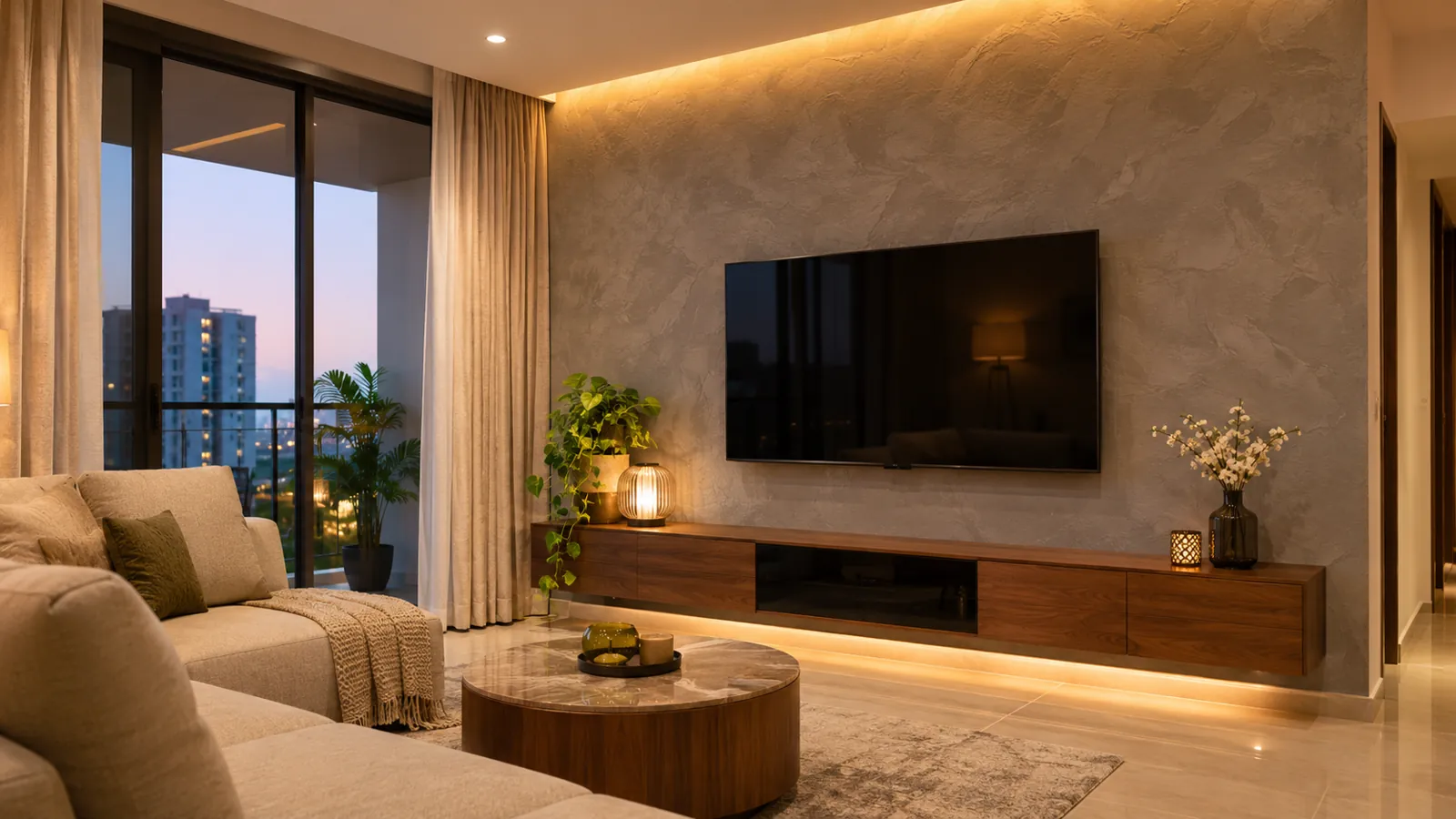
If you want ideas for the whole wall, such as panels, stone, wallpaper and niches, see our feature wall design ideas. This page stays with texture paint and low-cost wall decor.
Types of texture paint design and where each suits
Sand or rustic texture
Fine sand-like grains in the paint give a soft, matt, slightly rough finish. It suits a bed back wall or a study wall where you want warmth without a pattern.
Roller pattern texture
A rubber or foam roller with a cut design prints a repeating pattern: leaves, waves, lines or geometric shapes. It is quick to apply and suits a kids room or a passage wall. Keep the pattern small in small rooms, or the wall looks busy.
Stucco and trowel texture
A thicker coat is pressed and dragged with a trowel to make swirls, combed lines or a raw plaster look. It suits a TV wall in a living room or a large drawing room wall, where light from the side shows the relief.
Marble texture paint and Venetian-effect finish
Marble texture paint is built up in thin layers and burnished so the wall gets veins and a soft polish, like stone. A Venetian-effect finish is the same idea with a smoother, shinier result. It suits a foyer, a dining wall or a TV wall in a formal living room. It needs a very smooth wall and a skilled applicator, so it takes more labour and time than other types.
Metallic texture
Metallic paints with gold, copper, silver or pearl tones catch light and change through the day. Use them on one panel, a niche or a section behind a headboard, not across a full room. Too much metallic looks loud.
Exterior texture
Exterior texture coatings are made to handle sun, rain and dust. A medium grain on the house front hides dust and small hairline marks better than smooth paint. Pick a product rated for exterior use and ask about its water resistance. For the front of the house, plan texture together with the house front elevation design so colours and materials match.
Texture paint for living room, TV wall and bedroom
- TV wall: stucco, marble effect or a soft sand texture in a mid tone. Avoid glossy metallic directly behind the screen; it reflects light into your eyes. Our TV unit and TV wall designs show how texture works with the unit.
- Living room feature wall: keep the texture paint design to one wall, usually the wall you face when you enter or the sofa back wall.
- Bed back wall: sand, rustic or a soft roller pattern in a calm colour. Keep it matt so a reading light does not cause glare.
- Exterior front: a medium-grain exterior texture, often mixed with smooth paint bands or stone cladding.
- Avoid: kitchens and washrooms, where grease and steam stick to the grain, and narrow spots that people brush against every day.
Surface preparation decides how long it lasts
- Check for damp first. Look for patches, salt marks, bubbling and a musty smell, especially on walls next to a washroom, a terrace or an outside wall. Fix the source of water before any paint. Texture over damp will peel.
- Repair the plaster. Hollow, cracked or loose plaster is cut out and redone. Our wall plastering rate is Rs 50 per sq ft. Example: replastering one 12 ft x 10 ft wall is 120 sq ft x Rs 50 = Rs 6,000 for the plastering work.
- Putty and sanding. Wall putty fills small dents and gives an even base. For marble and Venetian effects, the wall must be very smooth. For sand and rustic textures, normal putty work is enough.
- Primer. A primer suited to the wall and the product helps the texture grip and gives even colour.
- Sample patch. Apply a small patch on the actual wall and approve it before the full wall is done.
How to choose a paint color for a textured wall
Texture changes how a colour looks. Raised grain casts tiny shadows, so the same shade reads a little darker on a textured wall than on a smooth one. Follow these steps.
- Light direction: a wall that gets side light from a window shows texture strongly. A wall lit from the front looks flatter. North-facing rooms get cooler light, so warm beige, sand and terracotta tones help. South and west light is warm and strong, so greys, sage and soft blues stay calm.
- Room size: in a small room, use a light shade with a fine texture. Dark colours and deep patterns suit large rooms and high ceilings.
- Sample at day and night: look at the sample patch in morning light, afternoon light and at night under your actual lamps. Warm LED and cool LED change the colour a lot.
- Link to the rest of the room: pick the feature colour from the sofa, curtains, wood or floor, and keep the other walls quiet.
For room-by-room colour suggestions, read our room-wise paint colour guide for Indian homes.
Texture paint price: why we price it after a site visit
People search for one texture paint price per sq ft, but there is no fair single number. The cost depends on the product, the finish, how many coats it needs, how much repair the wall needs and how skilled the applicator must be. A roller pattern on a sound wall and a hand-burnished marble effect on a wall that needs replastering are very different jobs. We visit, check the wall, apply a sample, then give a written quote. The table below shows what changes between tiers.
| Tier | Typical finish | Wall preparation | Price |
|---|---|---|---|
| Budget | Roller pattern or fine sand texture on one feature wall | Minor putty touch-up on a sound wall | Priced after a site visit and a sample |
| Standard | Stucco or trowel texture, or exterior texture on the front | Putty, primer, repair of small cracks | Priced after a site visit and a sample; plaster repair at Rs 50 per sq ft if needed |
| Premium | Marble or Venetian effect, metallic layers | Very smooth base; replastering where needed | Priced after a site visit and a sample; plaster repair at Rs 50 per sq ft if needed |
For our other published rates, see the Aarna 2026 rate card. GST is extra. If you also want the rest of the house painted, our painting service in Greater Noida page explains how a full repaint is planned.
Maintenance and dust
Greater Noida, Noida and the Yamuna Expressway belt get a lot of dust, and textured walls hold more of it than smooth walls. Dust the wall every few weeks with a soft dry brush or a microfibre cloth, moving top to bottom. Wipe marks gently with a damp cloth only if the product is washable; ask about this before you choose. Deep textures in a room with a window facing a road need more cleaning, so a finer grain is wiser there. Touch-ups on texture are harder to blend than on flat paint, so keep a little leftover material from the same batch.
Wall decor ideas that cost little
A wall does not need expensive work to look finished. These ideas work alone or next to one texture wall.
- One feature wall: texture or a strong colour on one wall, other walls plain. This gives the most effect for the least spend.
- Frames in a grid or a line: family photos or prints in matching frames, hung with the centre at roughly eye level.
- Floating shelves: two or three slim shelves with books, small plants and a few objects. Leave empty space.
- Lighting: a wall washer or a warm strip light above a textured wall brings out the relief at night. Plan the wiring point before painting.
- Plants: a tall plant beside a plain wall, or a few hanging planters near a window.
- A large mirror: makes a small room feel bigger and bounces daylight.
Mistakes to avoid
- Applying texture over damp or cracked walls. It peels and the repair costs more later.
- Putting texture on every wall. The room looks heavy and collects dust.
- Choosing colour from a shade card under shop lights, without a sample patch at home.
- Deep texture in a small room or a narrow passage, where clothes and hands rub the wall.
- Glossy metallic behind a TV, causing glare.
- Not planning lights and switch points first. Cutting a wall for wiring after texture spoils the finish.
- Using an interior product outside. Exterior walls need an exterior-rated coating.
- Skipping a written quote that names the product, the finish, the coats and the preparation.
Plan your texture wall with Aarna
Aarna Constructions & Interiors, based in Kasna, has worked on 200+ projects since 2017 across Greater Noida, Noida, Noida Extension, Jewar and the Yamuna Expressway. We check the wall for damp, repair plaster where needed, apply a sample of your chosen texture paint design and give a written quote. The timeline is given in writing with the quote. Contact Aarna for a site visit or call or WhatsApp +91 95825 81238.
Common questions
What is the texture paint price per sq ft?
There is no fair single rate because the product, the finish, the number of coats and the wall condition all change the cost. A roller pattern on a sound wall costs far less than a marble effect on a wall that needs replastering. Aarna visits the site, applies a sample and then gives a written quote. If the plaster needs repair, our wall plastering rate is Rs 50 per sq ft.
Which texture paint is good for a living room?
For a TV wall or sofa back wall, stucco, a soft sand texture or a marble effect works well. Use it on one feature wall and keep the other walls plain. Avoid glossy metallic directly behind the TV because it causes glare.
Is marble texture paint the same as real marble?
No. Marble texture paint is a layered paint finish that copies the look of veined stone on a plastered wall. It is lighter and can go on any sound wall, but it is not as hard as real stone. It needs a very smooth base and a skilled applicator.
Can texture paint be applied on a damp wall?
No. Damp must be found and fixed first, or the texture will bubble and peel. Check walls next to washrooms, terraces and outside walls for patches and salt marks before you plan any finish.
How do I clean a textured wall?
Dust it every few weeks with a soft dry brush or a microfibre cloth, working from top to bottom. Use a damp cloth only if the product is washable. Finer textures are easier to keep clean in dusty areas.
How do I choose a paint color for a textured wall?
Apply a sample patch on the actual wall and look at it in morning light, afternoon light and at night under your own lamps. Texture makes a colour look slightly darker, so choose a shade a little lighter than you think. Use light colours and fine textures in small rooms.