
A pooja room (or home mandir) is the space where the family prays, lights a diya and keeps idols, pictures and pooja items. It can be a full small room in a house, a niche in a wall, or a wall-mounted unit in a flat. The design theme is the material and look: wood, marble, jaali, glass or a simple modern niche.
Short answer: in most flats a wall-mounted unit, a corner unit or a niche with jaali doors works well; independent houses can give it a separate room with marble or carved wood. Choose a material that is easy to clean around diyas and incense, plan a drawer for pooja items, and add soft lighting. Below are 10 themes with a picture of each.
Pooja room types by space
Start with the space you have: a full room, a corner or a wall.
 Concept design
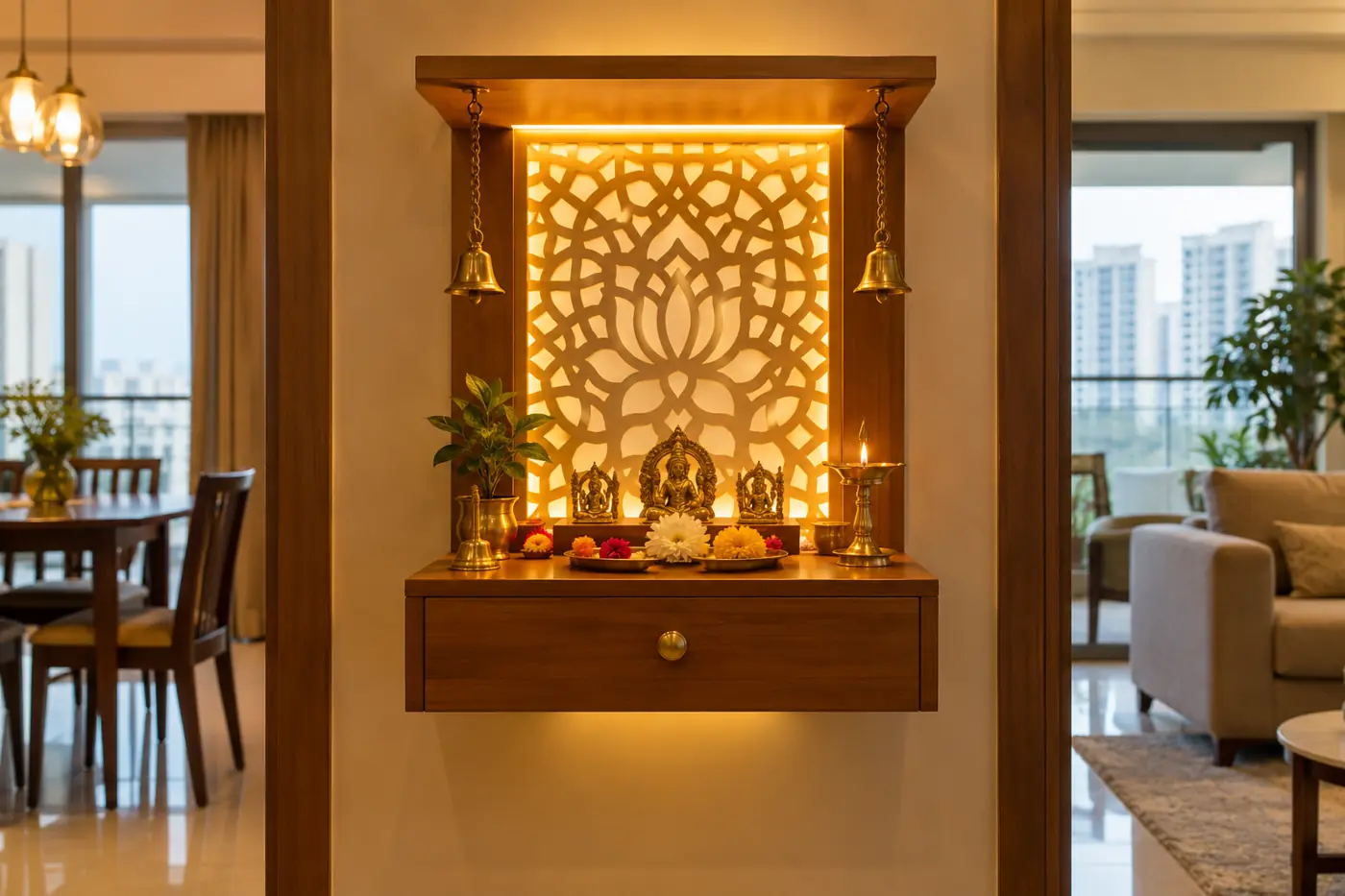
Wall-mounted Pooja Unit
A floating unit fixed on the wall, with one or two shelves and a drawer. It needs no floor space, so it suits small flats and rented homes.
Floating box shelf, back-lit jaali panel, small drawer, hanging bells
1BHK and 2BHK flats with no space for a pooja room
Budget
 Concept design
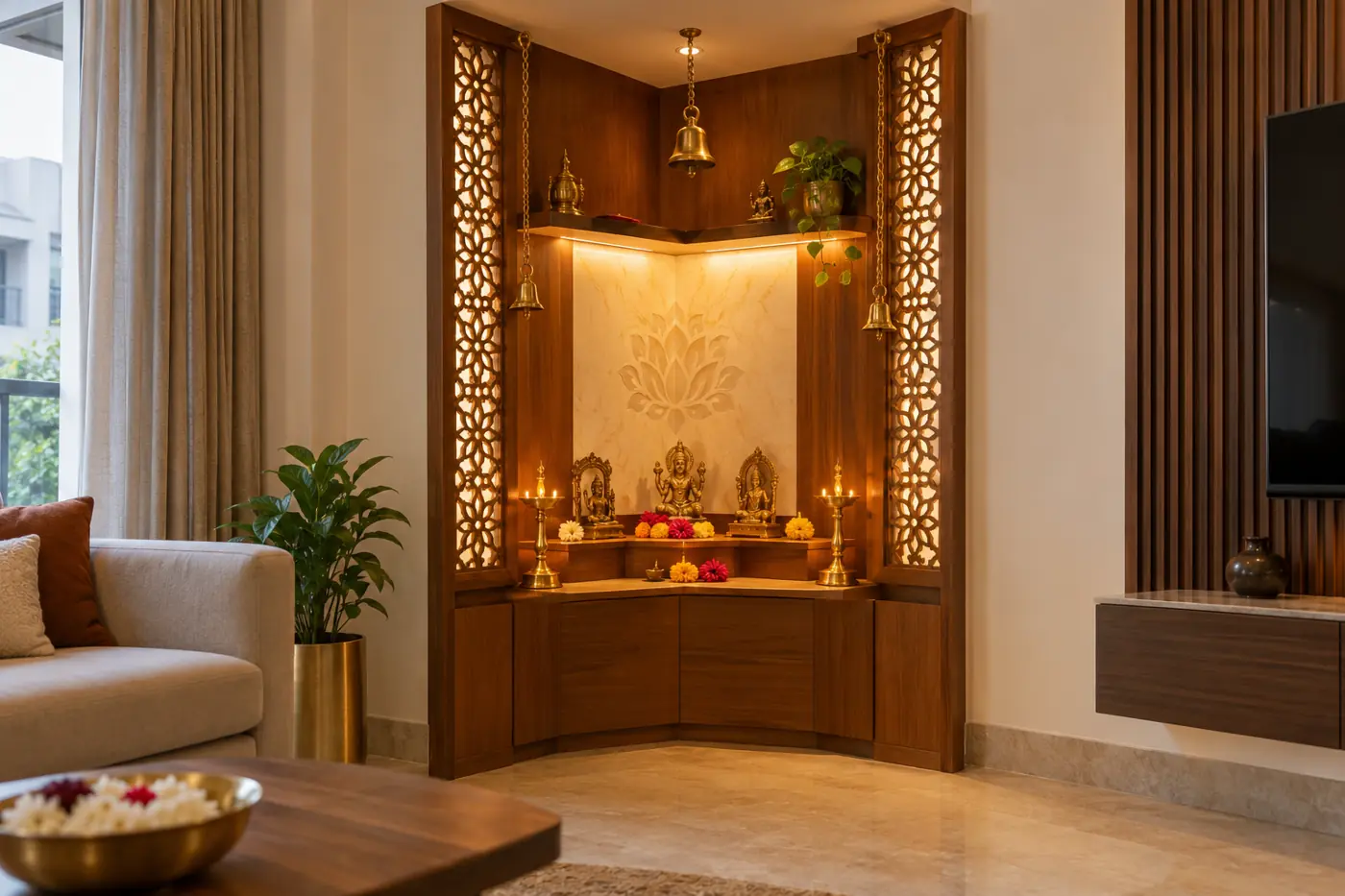
Corner Pooja Unit
A unit built into a free corner of the living or dining room, with shelves and side jaali panels. It uses a corner that is often wasted.
Corner shelves, jaali side panels, small platform, bells and lamp
Flats with a free corner; families who follow Vastu directions
Budget to Mid
 Concept design
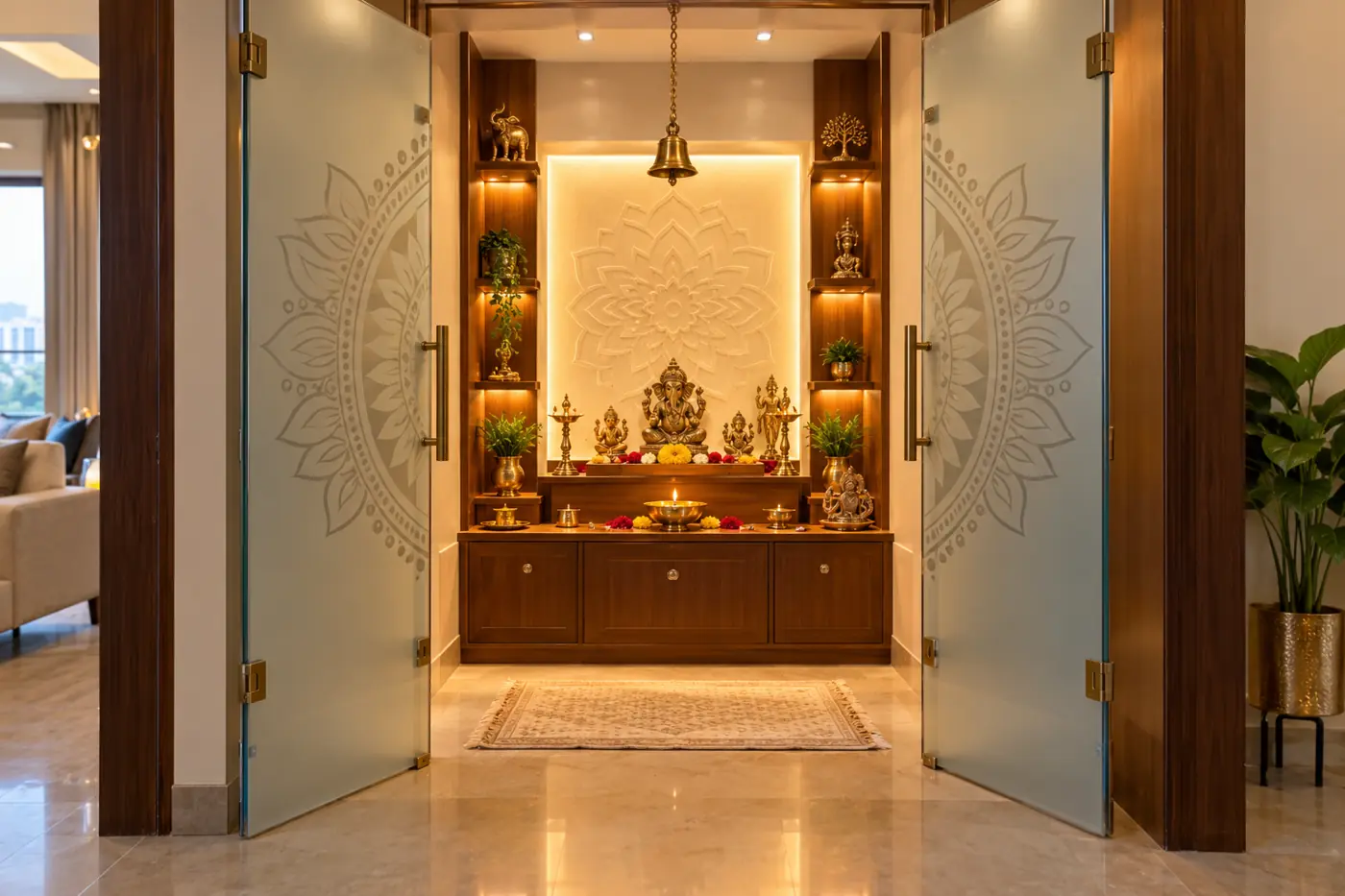
Pooja Room with Glass Doors
Frosted or etched glass doors close the pooja space but keep it visible. They keep dust out and look light and modern.
Frosted or etched glass with a simple pattern, wooden frame, inside shelf and light
Flats where the mandir sits in the living or dining area
Mid
 Concept design
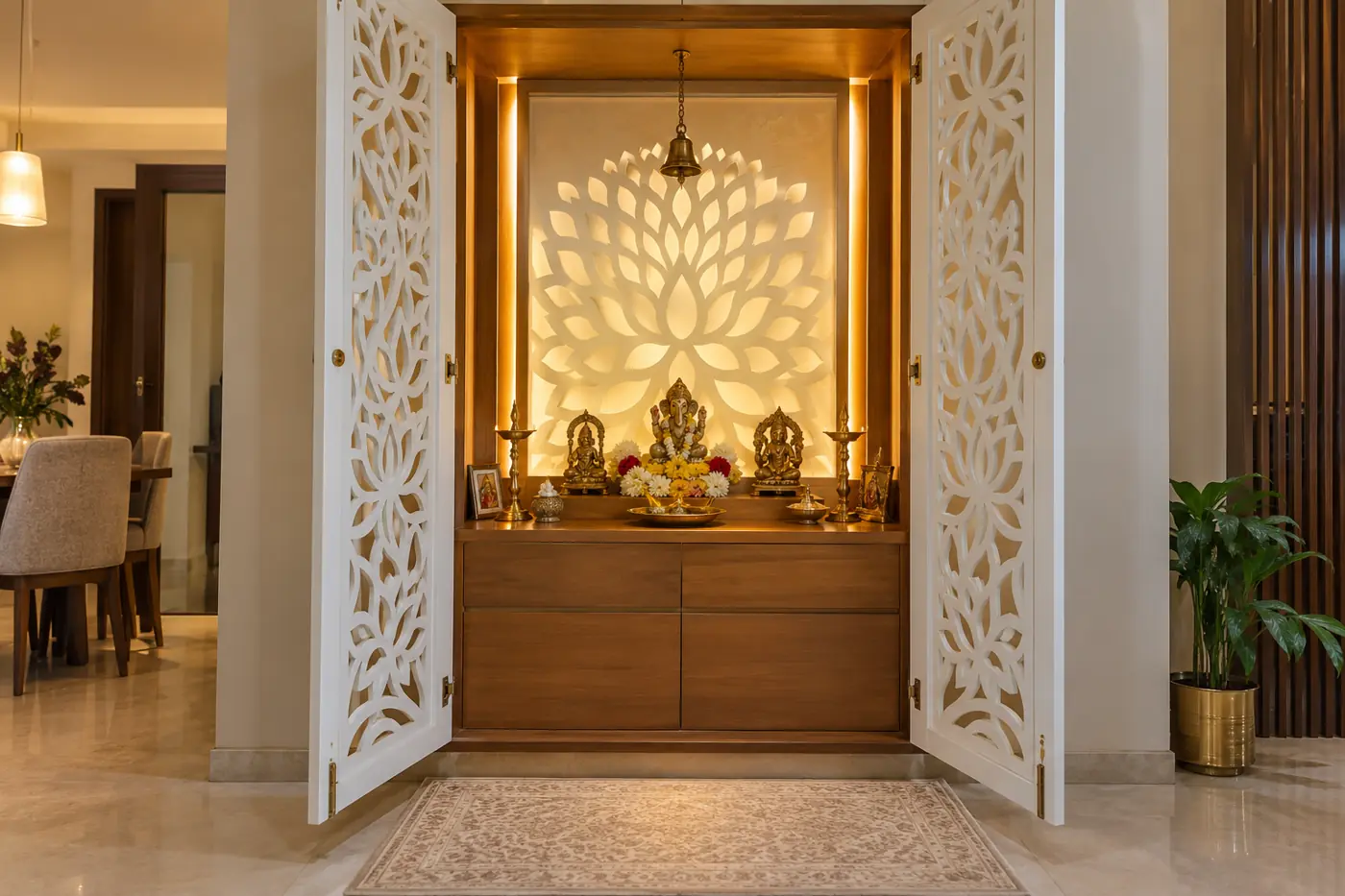
Pooja Room with CNC Jaali Doors
Doors or side panels cut by a CNC machine in patterns such as a lotus or geometric jaali. The pattern looks carved and lets light glow through, while keeping the space a little private.
CNC-cut MDF or wood doors, white or wood finish, back light behind the jaali
Pooja niches in living rooms and foyers
Mid
Pooja room materials
The material decides the look, the cleaning and the budget.
 Concept design
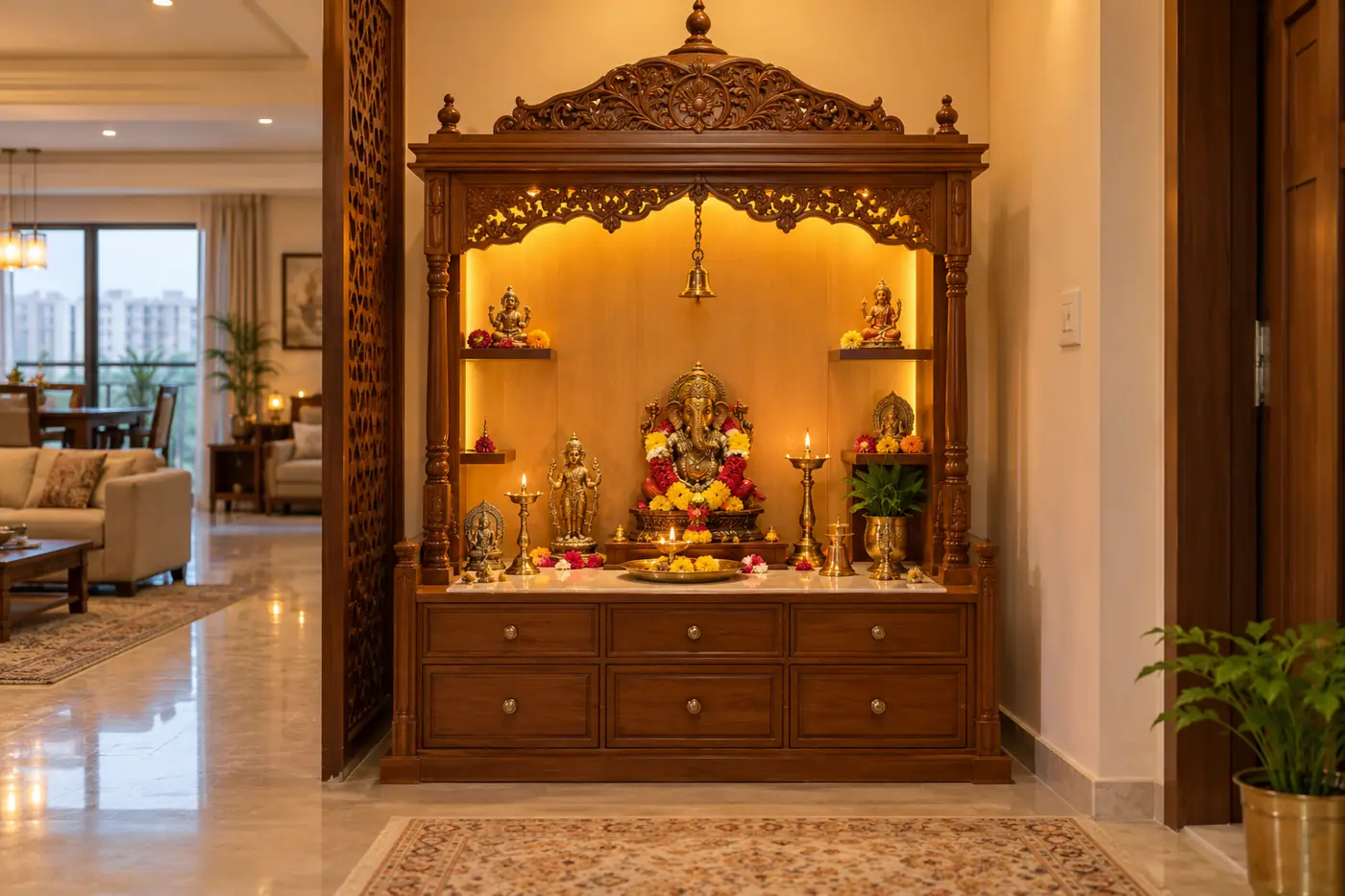
Wooden Mandir
A wooden mandir unit with a carved top, shelves for idols and drawers below for pooja items. It is the most familiar choice and fits against almost any wall.
Teak or teak-finish wood, carved top or arch, drawers for diya, incense and books, warm back light
Flats and houses that want a classic look
Budget to Mid
 Concept design
Marble Pooja Room
White marble on the back wall, steps or base gives a clean, pure look. Marble is easy to wipe after diyas and incense and lasts many years.
White marble back panel or base, carved marble details, brass diyas, soft cove light
Independent houses and families who want a traditional, long-lasting finish
Mid to Premium
 Concept design
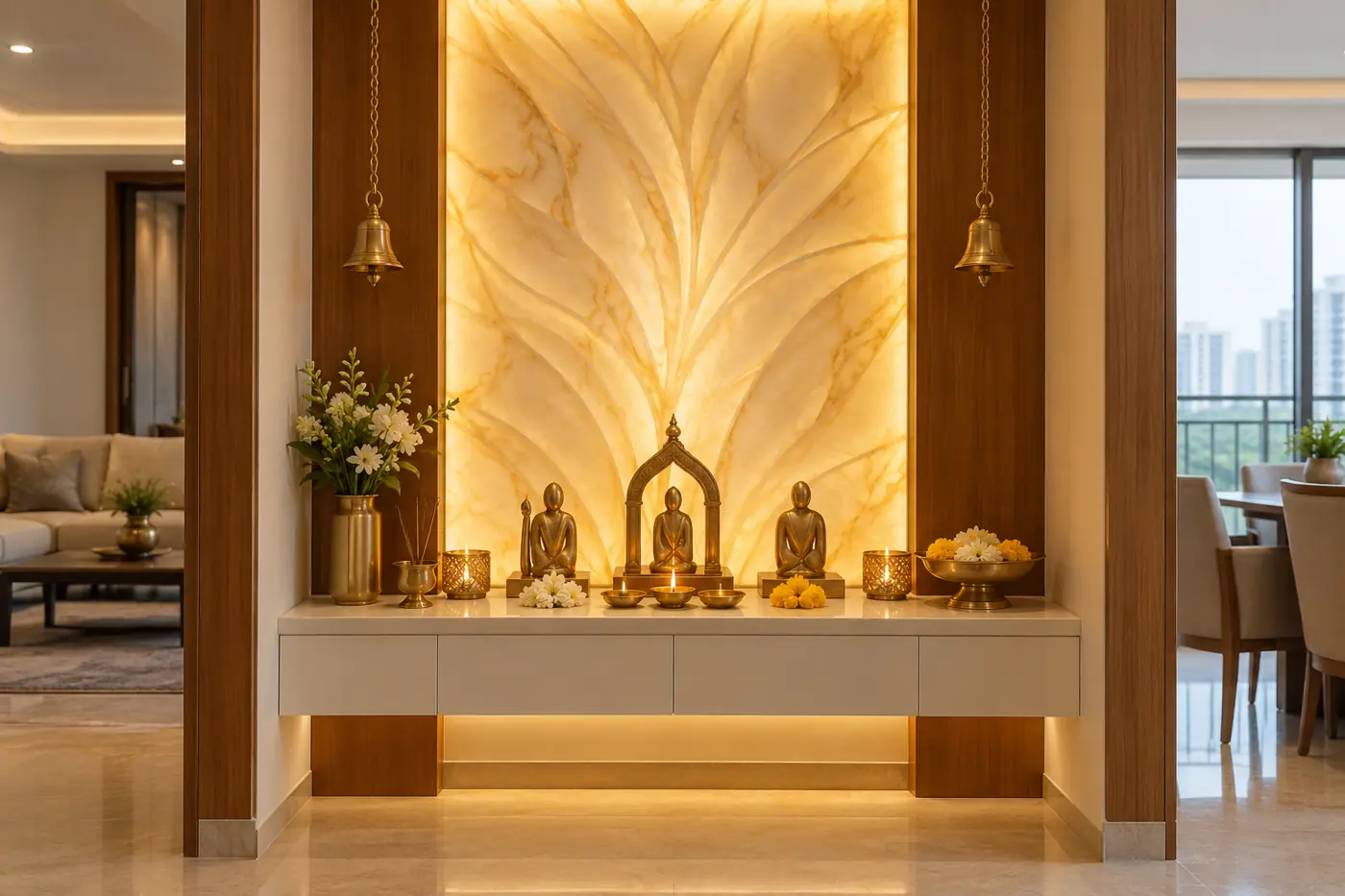
Back-lit Pooja Unit
A glowing panel of onyx-look stone or Corian behind the idols gives a soft, warm light. It looks modern and needs very little decoration.
Back-lit stone-look or Corian panel, white shelf, flowers and diya
Modern homes that want a calm, glowing look
Mid to Premium
Pooja room styles
Traditional or modern: match the style of the rest of your home.
 Concept design
Temple-style Pooja Room
A temple-style pooja room with carved wooden doors, pillars and a carved frame around the idols. It gives a full temple feel inside the home.
Carved doors and pillars, brass lamps, rangoli space on the floor
Independent houses and villas with a separate pooja room
Premium
 Concept design
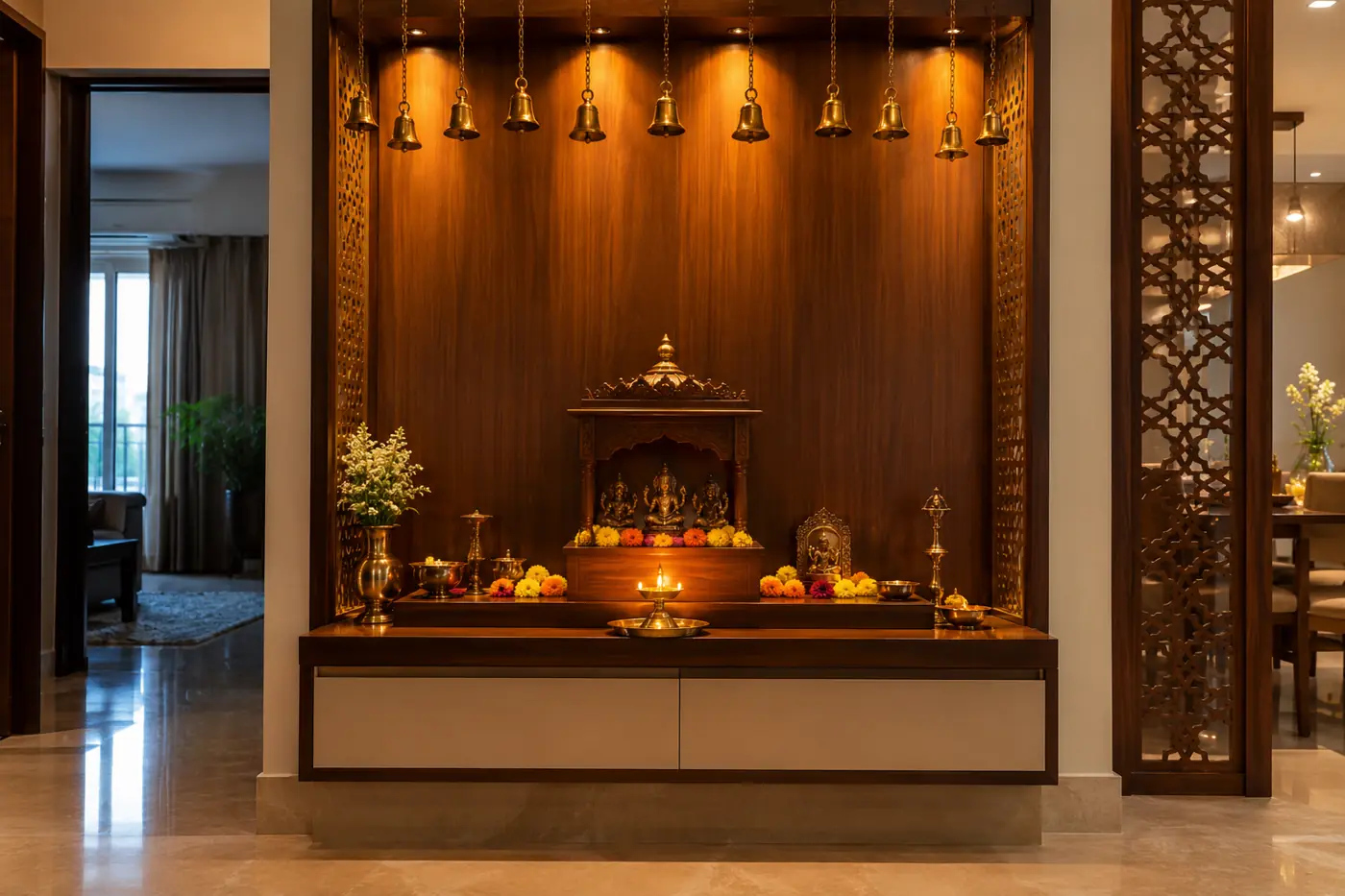
Pooja Unit with Brass Bells
Rows of brass bells hang at the top of the unit or the doorway. They add a traditional sound and shine to any pooja design.
Hanging brass bells, wooden or marble back panel, brass diyas and urli
Families who want a traditional touch in a modern home
Adds a small cost to any unit
 Concept design
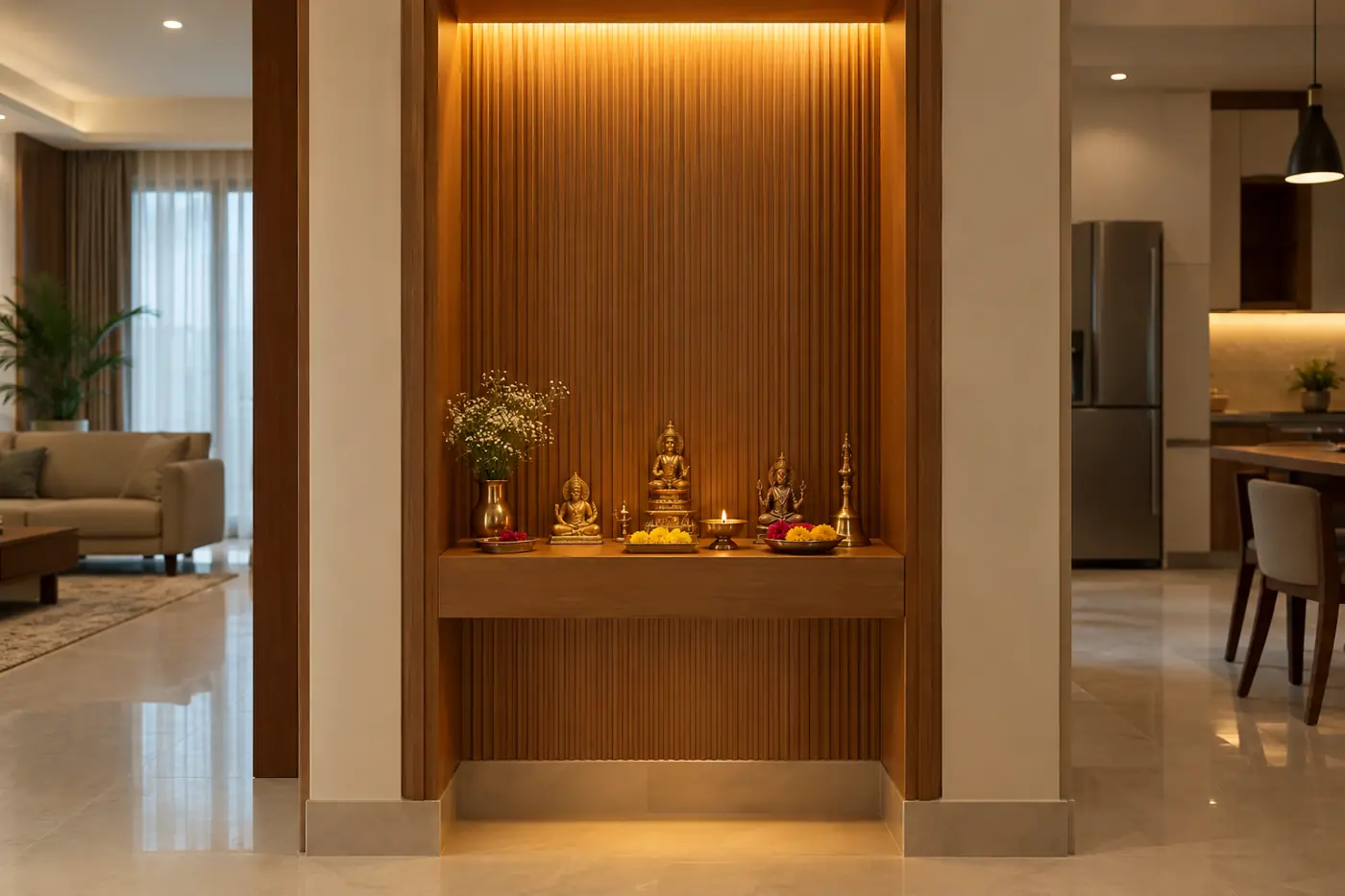
Modern Minimal Pooja Unit
A simple niche with a fluted wood back panel, one floating shelf and hidden light, with no carving. It feels calm and matches modern interiors.
Fluted or plain wood panel, single floating shelf, hidden LED strip
Modern and minimalist homes
Budget to Mid
All 10 pooja room themes compared
| Theme | Best for | Budget |
|---|---|---|
| Wall-mounted | 1BHK and 2BHK flats with no space for a pooja room | Budget |
| Corner | Flats with a free corner; families who follow Vastu directions | Budget to Mid |
| Glass door | Flats where the mandir sits in the living or dining area | Mid |
| CNC jaali | Pooja niches in living rooms and foyers | Mid |
| Wooden mandir | Flats and houses that want a classic look | Budget to Mid |
| Marble | Independent houses and families who want a traditional, long-lasting finish | Mid to Premium |
| Back-lit | Modern homes that want a calm, glowing look | Mid to Premium |
| Traditional temple | Independent houses and villas with a separate pooja room | Premium |
| Brass bells | Families who want a traditional touch in a modern home | Adds a small cost to any unit |
| Modern minimal | Modern and minimalist homes | Budget to Mid |
How to choose your pooja room design
- Check your space. No free room: choose a wall-mounted or corner unit. A spare corner or niche: a jaali or glass-door unit. A separate room: marble or carved wood.
- Plan for diyas and incense. Use materials that are easy to wipe, keep some gap above lamps, and plan good airflow.
- Plan storage. A drawer or cabinet keeps diyas, oil, incense and books in one place.
- Add soft lighting. A warm back light or cove light makes even a small unit look special.
- Follow your family’s customs. For direction and placement, see our Vastu pooja room guide.
Liked a design?
Send us the theme name on WhatsApp or call 95825 81238. Our team visits your home in Greater Noida, Noida or nearby for free, measures, and shows you a 3D design in your chosen theme.
WhatsApp us See our interior design service in Greater Noida
More from Aarna
- Vastu pooja room design guide
- Interior designer in Greater Noida
- Interior design ideas for apartments
- 2BHK interior design cost guide
- Interior design gallery: ideas for every room
The pictures on this page are concept design images by Aarna Constructions, made to explain each theme. For photos of finished homes, see our projects.
Frequently Asked Questions
A wall-mounted unit or a corner unit fits most small flats. A niche with jaali or glass doors also works well in a living or dining area.
Marble and Corian are the easiest to wipe after diyas and incense. Wood looks warm but needs a good polish and some gap above lamps.
Yes. Many flats keep the mandir in the living or dining area. Glass or jaali doors keep it neat and dust-free when not in use.
No. These are concept design images made to show each theme clearly. For our finished work, see our projects page. Every theme here can be built by our team.